Our designer always misses deadlines. That's why he's the best
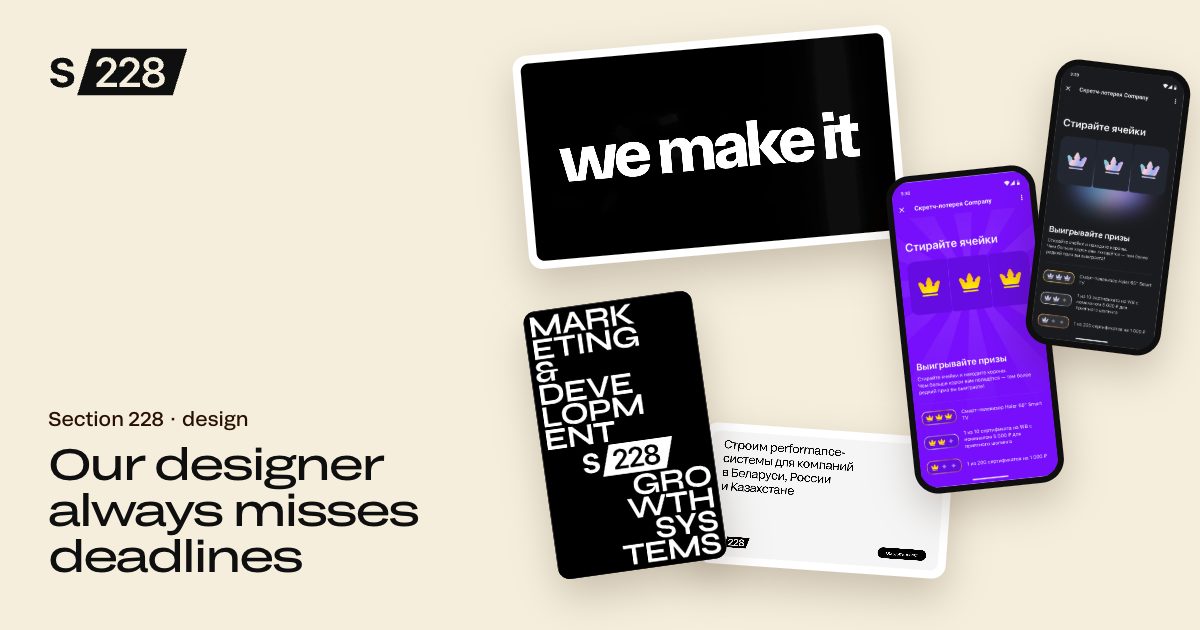
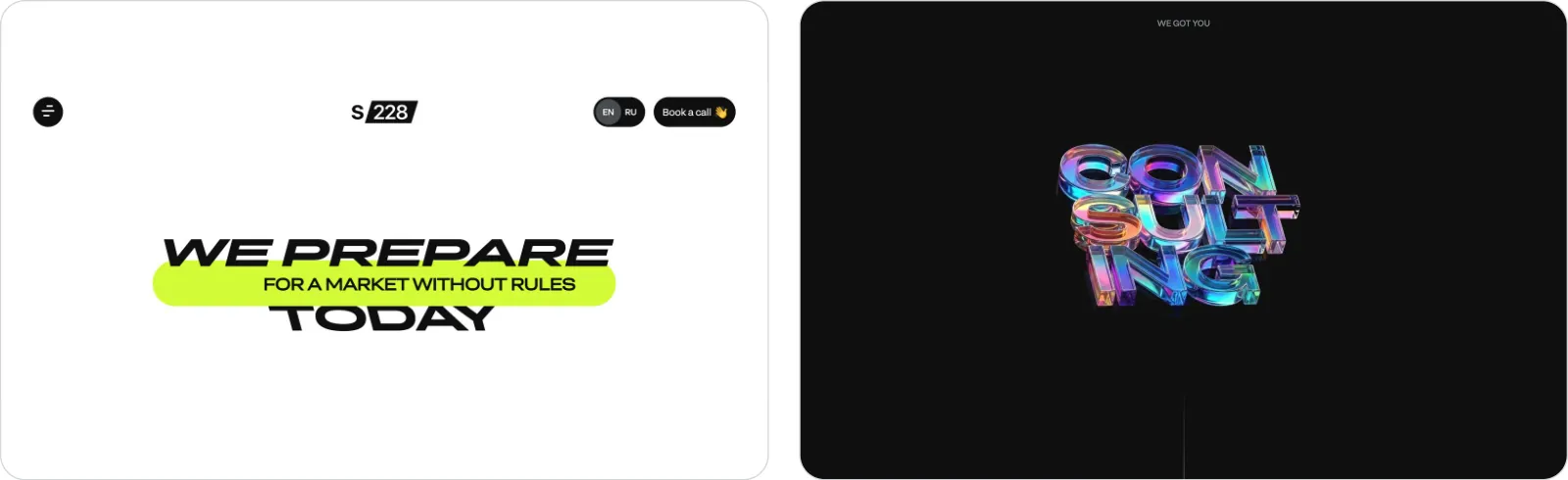
His name is Dmitry, and he's our designer. He drew almost everything you see at Section 228: the website, the video on the home page, our decks, business cards, the first screens of our product RollDrop. I've known him for more than ten years, and I honestly think he's the best designer I know. This article is about him, about how we do design, and a little about deadlines.
How it all started
Dmitry studied at a telecommunications university, to become a communications engineer, not a designer. While still a student, he made a collage of a friend of ours who loved "Carefree Angel" by the band Aria. I looked at that collage and realized: this guy has a talent for creative work. Later it turned out he had one for design too. In 2016, before we had any joint projects, he was already tearing apart a button in someone else's app: "this isn't UX. If you have to hold the button, at least put it in the center".
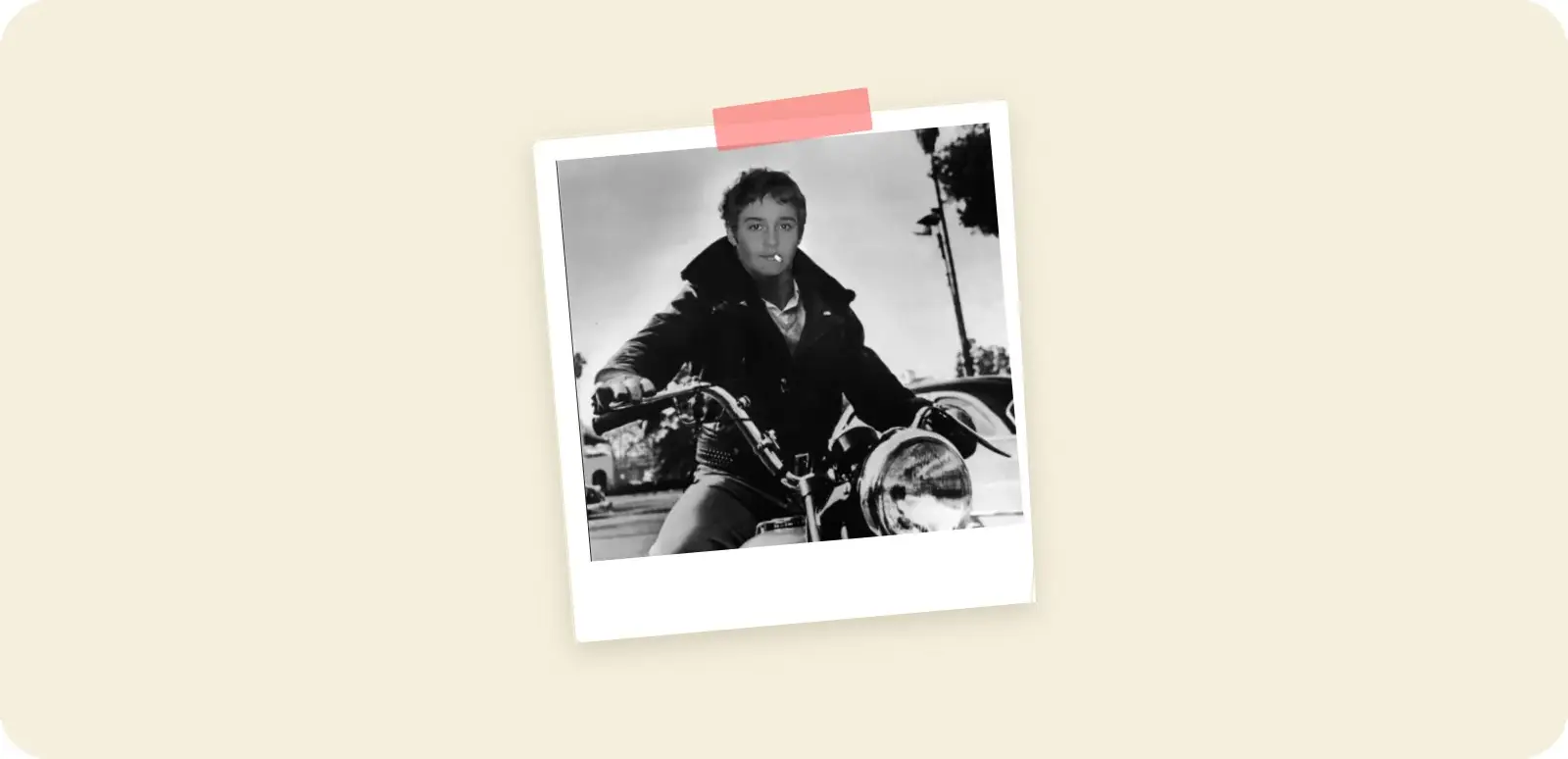
In 2017 we got our first joint projects: I brought in clients, Dmitry designed websites and landing pages. Back then I wrote to him: "you're the designer here, not me".
Why he always misses deadlines
In the autumn of 2024 I asked him to redesign the Section 228 website. Dmitry didn't start with a picture. He started with a question: "what do you want to tell the world through your business?"
Then came the deadlines. The design handoff moved from October 25 to November 11, then to the 18th, then we agreed on a week with no deadlines. A week later he wrote: "Not bad, made decent progress. Still didn't make it, though)". He handed over the design on December 11, and then we kept finishing the website together for more than a year.
And this is why he's great. The moment Dmitry starts working, he already sees how to do it better. So he redoes it. Then he sees an even better way. It's a recursion, and that recursion is exactly what produces design you look at and admire.
Once I asked him how to motivate him to work faster. He answered: "a good brief is very motivating)". Me: "are you trying to blame it on the doc not being written?)". The funny part is that he doesn't like redoing things because of other people's whims: "if the clients can't agree among themselves, I'm not going to redo everything five hundred times)". But his own work he redoes himself, until it's good.
Emotion, not a picture
In November 2025 I needed a deck for the agency. I wrote to him: "you convey an emotion, not a picture, and that's what art is". The first frames came four days later, the finished deck three months later. I replied: "You're the best designer I know".
Handing it over, he added: "a first approximation, to show clients instead of PowerPoint". That deck later became the foundation of the Section 228 design system. Our presentations and even the articles in this blog now run on it.
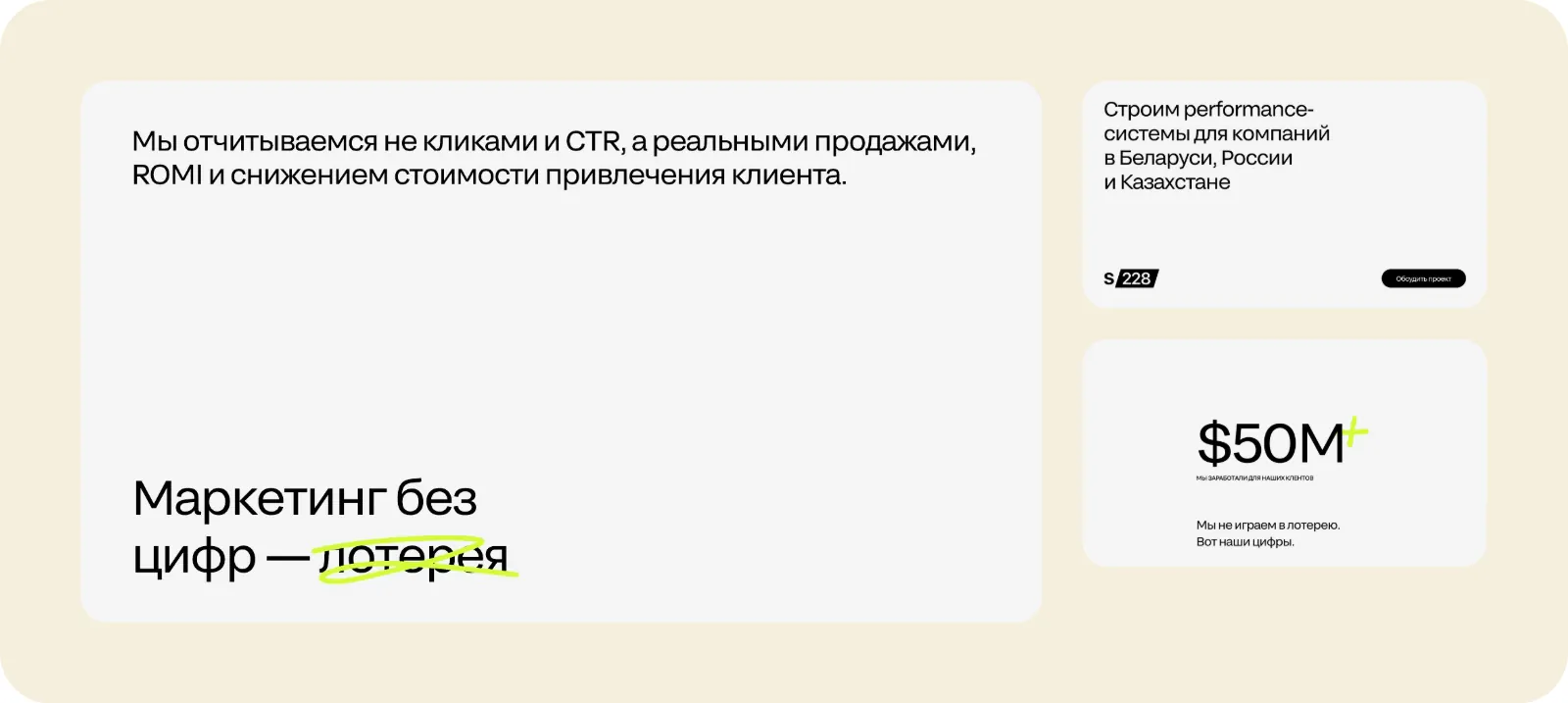
You convey an emotion, not a picture, and that's what art is.
Sat down to write a brief, made a video instead
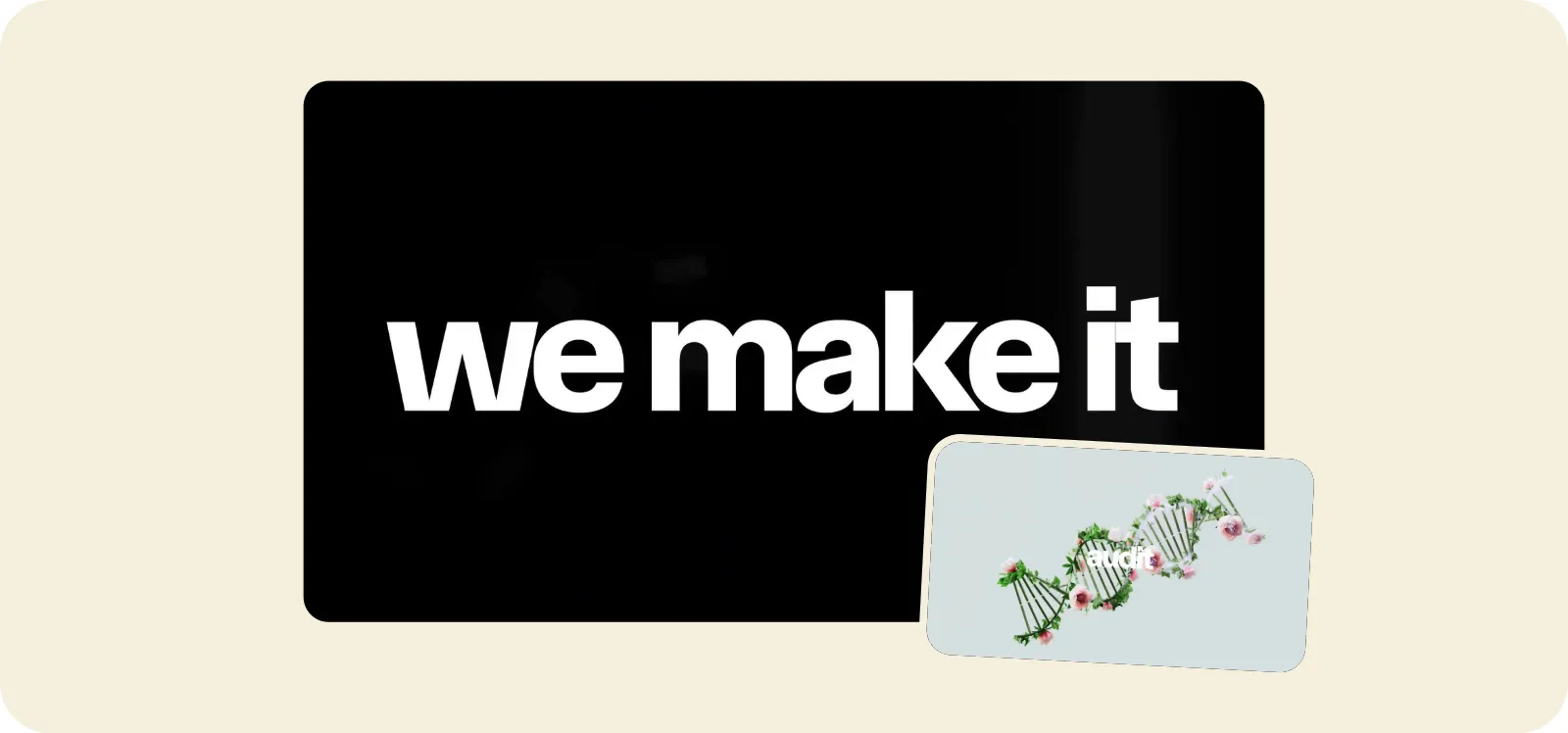
Once Dmitry was supposed to write a brief for a videographer about a video on us. Instead of the brief, this arrived: "sat down to write a reply, and instead of a reply I made a video". I answered: let them keep working until it's good and makes sense. In 2026 he also made the video for our home page himself, by hand. About AI-generated video he was short: "I don't support AI video". That said, he doesn't hate AI, he just spots it right away. About someone's picture in our chat he wrote: "smells like AI, but still beautiful".
Business cards: 10 out of 10
Dmitry started the business cards with a table: who we hand them to and what a person should feel when they hold the card. Three concepts grew out of it.
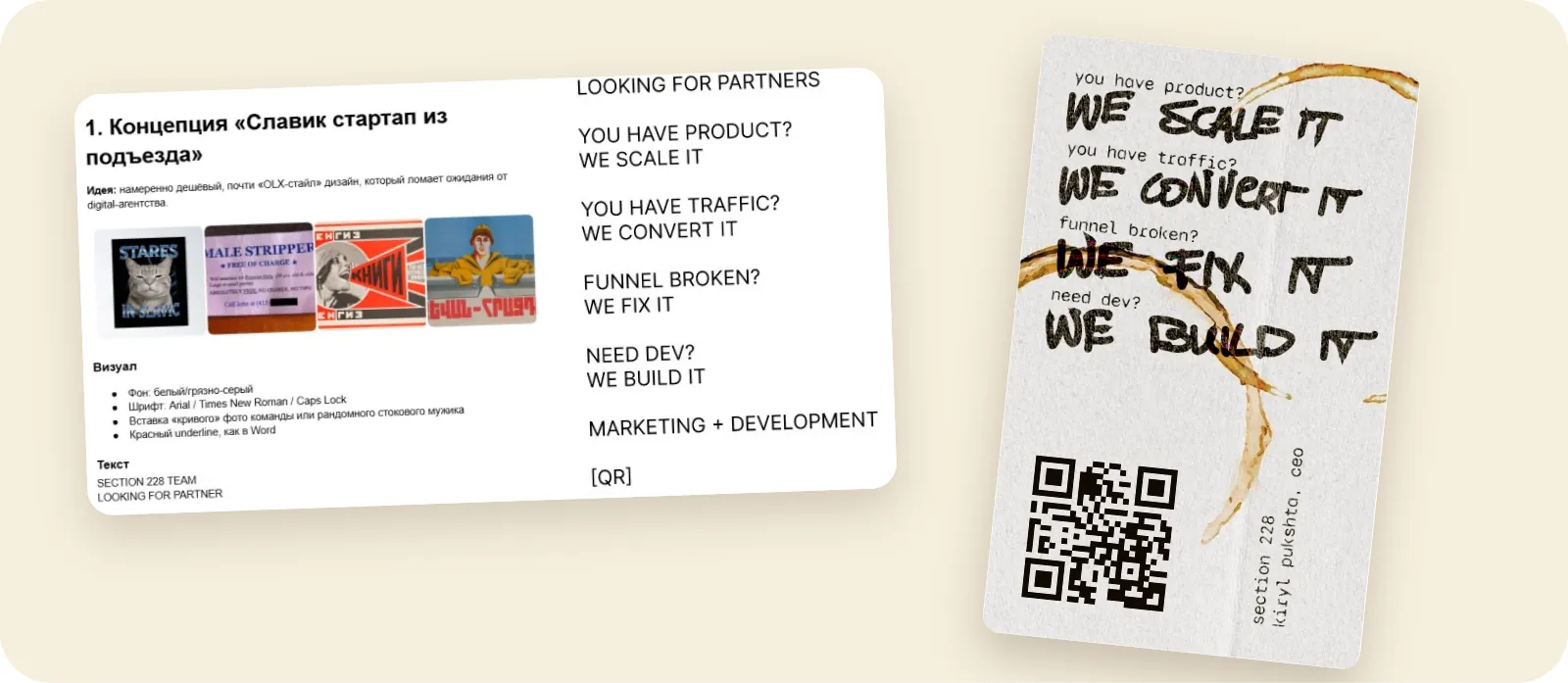
The first one was called "Slavik, a startup from the stairwell". A deliberately cheap card, like a flyer on a lamppost: kraft paper, coffee rings and handwritten lines "WE SCALE IT, WE CONVERT IT, WE FIX IT, WE BUILD IT". On the back, a collage of street ads and the question "are we in or not?". The goal was simple: break what people expect from a digital agency.
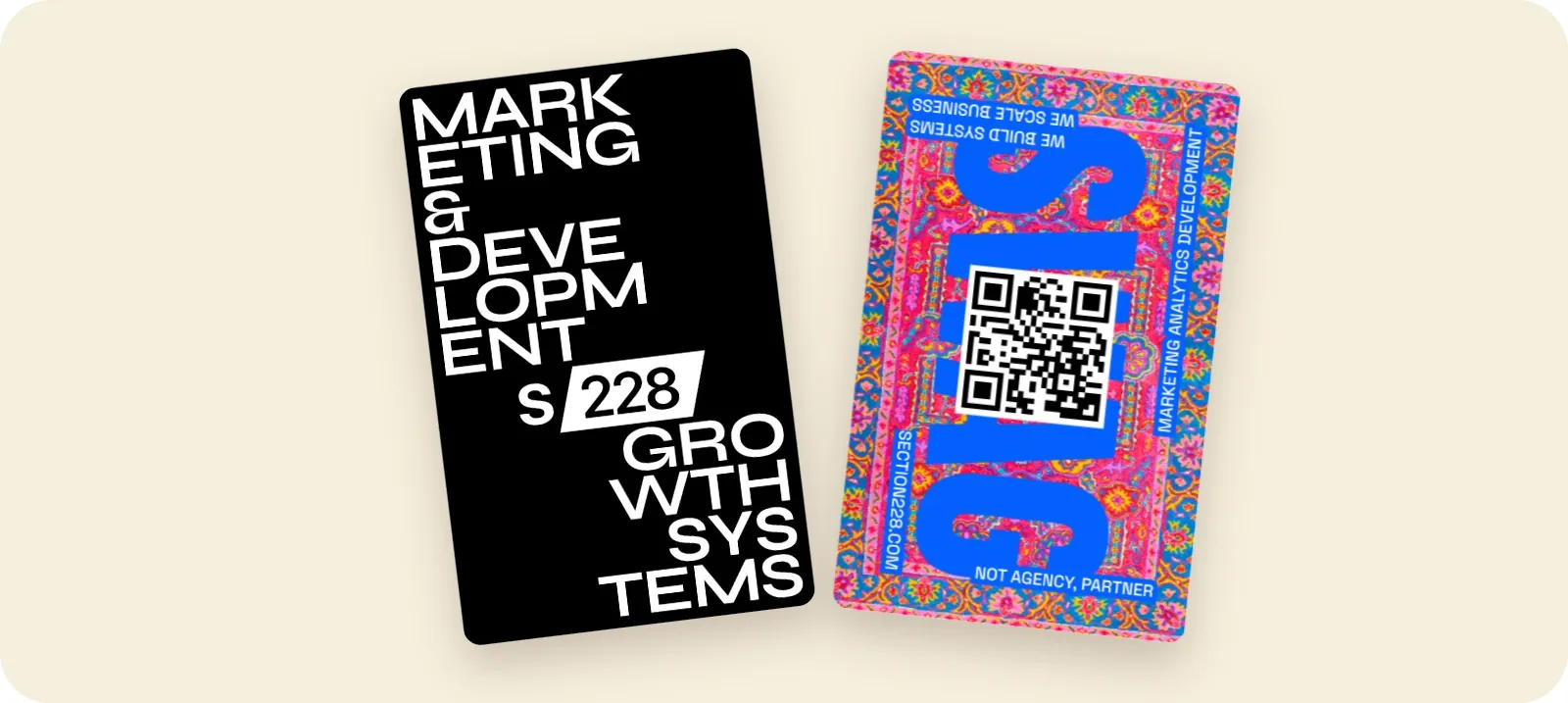
The second was "A serious card that breaks". On the front, a strict black Section 228, "Marketing & Development, Growth Systems". Flip it, and it's punk. Dmitry drew four different backs.
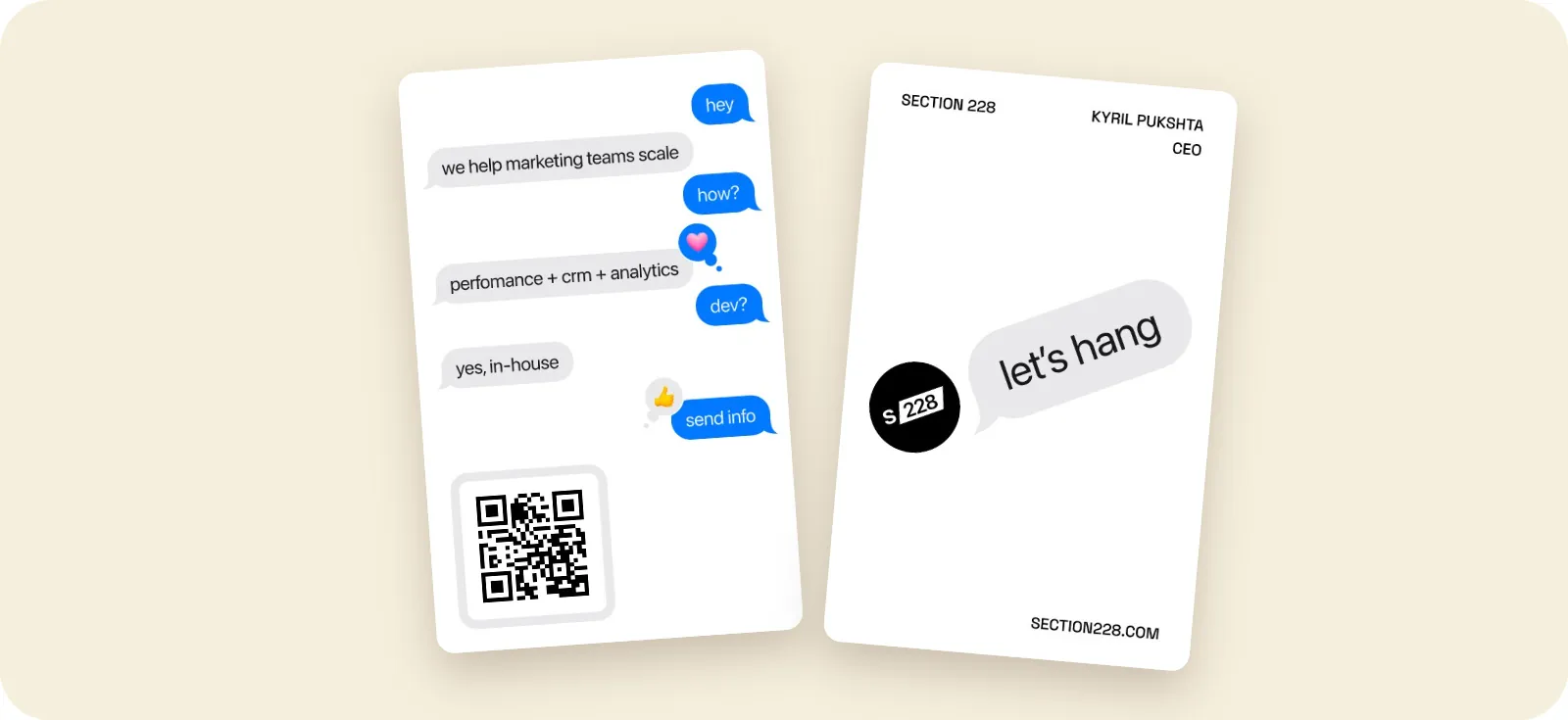
The third looked like a Telegram chat: bubbles "hey", "how?", "dev?" and "let's hang".
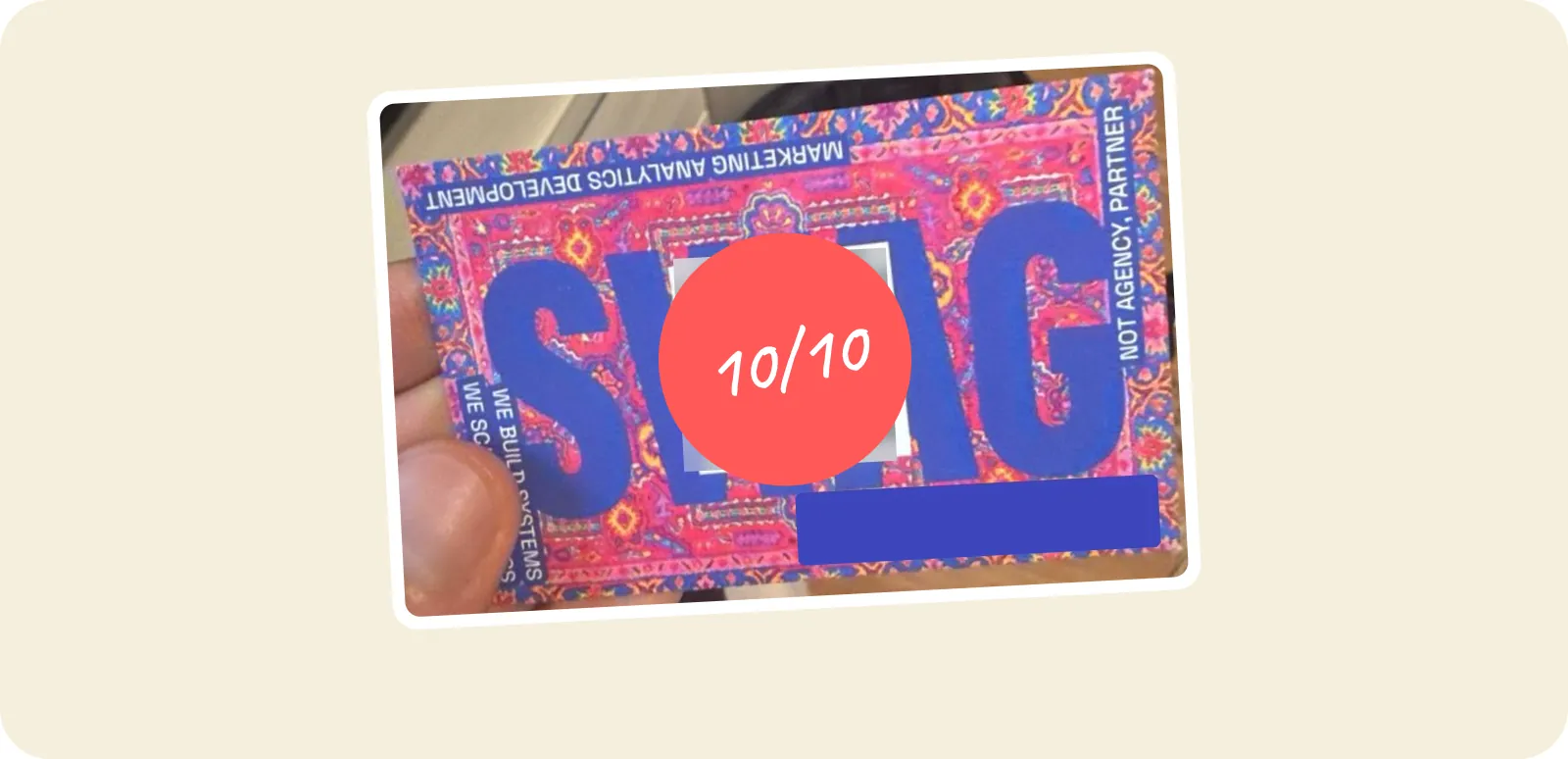
We printed the second one: a strict front and SWAG on a carpet on the back. In April 2026 the cards arrived, I wrote "just 10 out of 10", he replied: "loved the process". The sticker from those cards, "We build systems · We scale business", now sits on the preview of every Section 228 link.
How we do design
| Stage | What the designer does | What the business gets |
|---|---|---|
| Questions | finds out who comes and what they need to see | it's clear what the design is for |
| Concept | puts the idea and the mood together in Figma | one idea for the whole brand |
| Design system | colors, fonts, blocks, rules | new pages and materials without redoing everything |
| Mockups | website, presentations, business cards, interfaces | everything in one style |
| Motion | video, animation, effects | people remember the brand |
For us, design isn't "make it pretty". It's the answer to the question of what a business wants to tell people. Dmitry has his own rule for this: "let the programmers figure that out. The people who use your product shouldn't have to".
And the second one: he talks to the client directly. "When communication goes through two layers or more, the result suffers".
AI-ready design system: how do you get Claude Design to stay on brand?
Dmitry's deck became the foundation of the Section 228 design system. Claude Design now draws this blog's articles and our presentations on it. We don't explain our colors and fonts to the AI every time. It takes them from the system itself.
How is that different from a UI kit in Figma? A person looks at a kit. A design system for AI gets read by a machine, so besides colors, fonts and blocks it spells out the rules in plain text: what's allowed, what isn't, how to put together a slide or a cover.
One game, four themes
Same screens, same layout. Colors, crowns and cell covers come from the design system
That's why an AI presentation maker without your own system draws in its style, not yours. With one, Claude or another AI builds presentations, ads and articles on brand, and you make them yourself, without a designer for every edit. We already run four live systems like this, Section 228 and RollDrop among them.
Thank you, Dima
Once you wrote to me: "it's really cool that you live for your work and get a kick out of it". Well, that's about you too. We write this blog and draw our articles and presentations on your design system. Every time a client says "your stuff looks so good", that's about you. Thank you for eleven years, for the recursion, and for working until it's good and makes sense.
Want a design by Dmitry?
A website, a brand identity, a presentation, an app interface or a video. We do it with love and don't hand it over until it's good.
We can also build you a design system that AI uses to make your materials on its own.
Leave a requestQuestions
- How does a designer work at an agency?
- First they ask questions about the business and its people, then put together the concept, the design system, and only after that the mockups: website, presentations, business cards, interfaces.
- Why is website design done in Figma?
- In Figma you see the whole website at once, edits are quick, and the developer takes exact sizes and colors straight from the mockup.
- What does a brand identity include?
- A logo, colors, fonts, graphics and the rules for how they work together on the website, in social media and on paper.
- How much does website design cost?
- It depends on the number of pages and the tasks. Leave a request, and we'll name the timeline and the price for your project.
- How do you set up a design system in Claude Design?
- Take your brand identity, write down its colors, fonts, blocks and rules as text the AI can read, and connect the system to the canvas. From there Claude Design draws presentations, ads and articles on brand. That's how we draw the articles in this blog.
- Why does an AI presentation maker ignore your brand style?
- It doesn't know your brand, so it uses its own templates. Your own design system fixes that: the AI takes colors, fonts and rules from it.
- Can AI replace a designer?
- A neural network makes pictures fast, but it doesn't answer the question of what a business wants to say. That's the designer's job.